All through Order of the Phoenix, Harry and Dumbeldore and the others have a very hard time conveying to others the truth of Voldemort's return.
This is a situation that we all can understand - sometimes the truth is so scary that a lot of people would prefer to ignore it.
I believe that this is exactly what's going on right now in Israel. Even as most governments of the world, even some Arab governments, are supporting Israel's need to defend its citizens against years of terror, others (especially the media) are refusing to accept the reality of Palestinian terror.
The video clip below conveys the point very well. Hopefully, if the world can realize the truth, we can find a way forward from there that will succeed in bringing true peace, peace without terror.
Wednesday, January 7, 2009


Harry Potter and Torah book on sale at Amazon
Amazon now has Harry Potter and Torah available at a sale price of $17.95, down from the usual price of $19.95. They also have it eligible for free shipping.
Click here to check it out!
http://www.amazon.com/gp/product/1847532373?tag=hpt-20&linkCode=as2&camp=1789&creative=390957&creativeASIN=1847532373
For a sample chapter that relates to this upcoming week's Torah portion, see a book chapter on Magical Protection.
Click here to check it out!
http://www.amazon.com/gp/product/1847532373?tag=hpt-20&linkCode=as2&camp=1789&creative=390957&creativeASIN=1847532373
For a sample chapter that relates to this upcoming week's Torah portion, see a book chapter on Magical Protection.
Monday, December 29, 2008
Good article in Wall St Journal
I recommend the following article to everyone interested in understanding the war underway in Gaza:
http://online.wsj.com/article/SB123051182944538487.html
Saturday, December 27, 2008
Israel finally defends its citizens
Hi everyone. Here in Beit Shemesh we heard warplanes, and possibly missile explosions, today right before Shabbat lunch. As of now the news is good -- Israel appears to finally have done something right to defend its citizens against the thousands of rockets that have been fired from Gaza since Israel withdrew from Gaza.
We're all praying that the Israeli army finish its mission successfully, quickly, with as few casualties as possible.
Thursday, November 20, 2008
Shalshelet: Dealing with temptation and uncertainty
The Harry Potter books are filled with people who are having a hard time dealing with temptation, and are feeling a lot of uncertainty about what to do. In Deathly Hallows we see Xenophilius Lovegood trying to decide what to do when Harry visits:
Later, of course, we find out that he was torn over whether to help Harry or whether to turn Harry in to the death eaters in order to save Luna.
Many other times we see people in similar dillemas. The Malfoys are torn between their alliegence to Voldemort and their desire to save Draco. Harry is torn between searching for horcruxes and seeking hallows. Harry is also torn between believing in Dumbeldore and distrusting him.

The Torah identifies four people that epitomize dillemas. Each of them are marked with a special "trop" note, a special way of singing that word. This note is called a "shalshelet," and it appears only four times in the Torah. The note is shaped like a zig-zag line, signifying someone being torn between two sides, two possible decisions. The tune for the note is similar, a very long note sounding like someone going "back and forth" over a dillema.
The first shalshelet in the Torah was read in last week's Torah portion, VaYera. Angels go to the town of Sedom (Sodom) to destroy it, and save Abraham's nephew Lot and his family. As they lead them away, Lot is torn - does he stay in his town, his home, with his people, or does he leave with the angels? Gen 19:16 tells us "and he hesitated," and the Hebrew word, "va'yit'ma'ma," is marked with a shalshelet, telling us graphically and musically of Lot's dillema. Lot ends up saved from his indecision by the angels who "grabbed him by the hand" and led the family to safety.
The second shalshelet is in this Shabbat's Torah portion, Chayei Sarah. Abraham asks Eliezer his assistant to travel to Abraham's birthplace to find a wife for Abraham's son Issac. The Midrash tells us that Eliezer was conflicted about his task, because he truly wanted his own daughter to marry Issac. He knew that he could return to Abraham and say that he was unsuccessful, and Issac would likely marry Eliezer's daughter. Instead, as he arrived at his destination, overcome with indecision, the Torah tells us that he prayed to G-d for guidance and help in finding a suitable young lady. When the Torah tells us that Eliezer prayed, in Gen 24:12, the word is again marked with a shalshelet.
The third shalshelet is in the story of Joseph becoming a slave in Egypt, in the Torah portion of VaYeshev. After becoming a slave to Potifar, one of Pharoh's ministers, Potifar's wife attempts to seduce Joseph into immoral activities. Gen 39:12 tells us that "Joseph refused," again punctuated with a shalshelet. Joseph first tried to convince Potifar's wife that it would be wrong to do what she was suggesting, and then he simply ran out of the house.
The fourth shalshelet is found in an unlikely place, towards the end of the Torah when Moses is inaugurating Aaron's sons into their roles as priests (Lev 8:23). On the surface there's no dillema here, but the Midrash tells us that, similar to Eliezer, Moses wanted his sons to follow in his footsteps, but G-d decided that Aaron's sons would be priests but that Moses's own children would have no future role. In this case, the dillema didn't show itself in action, since Moses had the inner strength to simply perform the inauguration service. The shalshelet signifies how Moses felt, but he didn't let the feelings get in the way of what he had to do.
So we see in the Torah four different ways of dealing with dillemas:
1. Pray for Divine assistance (Eliezer)
2. Take active steps to reach the right decision (Yosef)
3. Just do the right thing, feel the dillema but don't act on it (Moses)
4. Fail the test (Lot)
Xenophilius Lovegood seems to have failed the test, and was saved from the consequences by Hermione. But Draco's parents passed, as much for self-interest as for doing the right thing. And of course Harry worked his way through his own dillemas, as victorious in his decisions as he is in his wandwork.
How are we at dealing with dillemas? If we can't just do the right thing, we can pray for clarity or we can take active steps to move away from temptation. Either way, if we want to succeed like Harry, one way is to learn the lesson of the shalshelet.
'Would it be OK if we came in?' asked Harry. 'There's something we'd
like to ask you.'
'I ... I"m not sure that's advisable,' wispered Xenophilius. He
swallowed and cast a quick look around the garden. 'Rather a shock ... my
word ... I ... I'm afraid I don't really think I ought to -'
...
His good eye moved again to Harry's scar. He seemed simultaneously
terrified and mesmerised... He kept swallowing, his eyes darting between
the three of them. Harry had the impression that he was undergoing some
painful internal struggle.
Later, of course, we find out that he was torn over whether to help Harry or whether to turn Harry in to the death eaters in order to save Luna.
Many other times we see people in similar dillemas. The Malfoys are torn between their alliegence to Voldemort and their desire to save Draco. Harry is torn between searching for horcruxes and seeking hallows. Harry is also torn between believing in Dumbeldore and distrusting him.

The Torah identifies four people that epitomize dillemas. Each of them are marked with a special "trop" note, a special way of singing that word. This note is called a "shalshelet," and it appears only four times in the Torah. The note is shaped like a zig-zag line, signifying someone being torn between two sides, two possible decisions. The tune for the note is similar, a very long note sounding like someone going "back and forth" over a dillema.
The first shalshelet in the Torah was read in last week's Torah portion, VaYera. Angels go to the town of Sedom (Sodom) to destroy it, and save Abraham's nephew Lot and his family. As they lead them away, Lot is torn - does he stay in his town, his home, with his people, or does he leave with the angels? Gen 19:16 tells us "and he hesitated," and the Hebrew word, "va'yit'ma'ma," is marked with a shalshelet, telling us graphically and musically of Lot's dillema. Lot ends up saved from his indecision by the angels who "grabbed him by the hand" and led the family to safety.
The second shalshelet is in this Shabbat's Torah portion, Chayei Sarah. Abraham asks Eliezer his assistant to travel to Abraham's birthplace to find a wife for Abraham's son Issac. The Midrash tells us that Eliezer was conflicted about his task, because he truly wanted his own daughter to marry Issac. He knew that he could return to Abraham and say that he was unsuccessful, and Issac would likely marry Eliezer's daughter. Instead, as he arrived at his destination, overcome with indecision, the Torah tells us that he prayed to G-d for guidance and help in finding a suitable young lady. When the Torah tells us that Eliezer prayed, in Gen 24:12, the word is again marked with a shalshelet.
The third shalshelet is in the story of Joseph becoming a slave in Egypt, in the Torah portion of VaYeshev. After becoming a slave to Potifar, one of Pharoh's ministers, Potifar's wife attempts to seduce Joseph into immoral activities. Gen 39:12 tells us that "Joseph refused," again punctuated with a shalshelet. Joseph first tried to convince Potifar's wife that it would be wrong to do what she was suggesting, and then he simply ran out of the house.
The fourth shalshelet is found in an unlikely place, towards the end of the Torah when Moses is inaugurating Aaron's sons into their roles as priests (Lev 8:23). On the surface there's no dillema here, but the Midrash tells us that, similar to Eliezer, Moses wanted his sons to follow in his footsteps, but G-d decided that Aaron's sons would be priests but that Moses's own children would have no future role. In this case, the dillema didn't show itself in action, since Moses had the inner strength to simply perform the inauguration service. The shalshelet signifies how Moses felt, but he didn't let the feelings get in the way of what he had to do.
So we see in the Torah four different ways of dealing with dillemas:
1. Pray for Divine assistance (Eliezer)
2. Take active steps to reach the right decision (Yosef)
3. Just do the right thing, feel the dillema but don't act on it (Moses)
4. Fail the test (Lot)
Xenophilius Lovegood seems to have failed the test, and was saved from the consequences by Hermione. But Draco's parents passed, as much for self-interest as for doing the right thing. And of course Harry worked his way through his own dillemas, as victorious in his decisions as he is in his wandwork.
How are we at dealing with dillemas? If we can't just do the right thing, we can pray for clarity or we can take active steps to move away from temptation. Either way, if we want to succeed like Harry, one way is to learn the lesson of the shalshelet.
Monday, November 17, 2008
Donated 10% of book proceeds
Just wanted to let everyone know that 10% of my proceeds from recent sales of Harry Potter and Torah was just donated to the Ahavat Yisrael school in Beit Shemesh. This was my periodic donation in keeping with my statement (not an oath or unbreakable vow) on the book cover that 10% of book proceeds would be donated to schools in Israel addressing the educational needs of recent immigrants.
Anyone who would like to donate to them or similar institutions, send me an e-mail and I'll give you the appropriate contact info.
Tales of Beedle the Bard coming out soon!
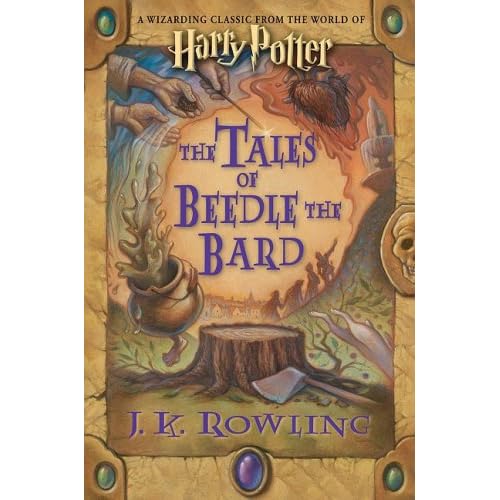
J. K. Rowling's Tales of Beedle the Bard will be available soon, and can be pre-ordered now from Amazon! This will be a great gift, and a must-have, for Harry Potter fans.
Click here:
to pre-order the book now, for only $7.60
Thursday, November 13, 2008
VaYeira: Mudbloods, Moabites, and Moshiach
The following is excerpted from a chapter of Harry Potter and Torah, and never before published on-line. The complete version can be read in the book. Enjoy!
Throughout the Harry Potter series we read (or hear) about the following question: How important is it for a wizard (in the world of Harry Potter) to have pure wizard ancestry? This is the conflict summed up well by Harry's friend Ron in Chapter seven of Chamber of Secrets, after Hermione is called a "mudblood" by another student (in the movie this is said by Hermione herself):
Throughout the series this debate rages on, as Dumbeldore says to the Minister of Magic at the end of Goblet of Fire (chapter thirty six) :
What do you think the Torah says about the subject?
There is a surprising attitude towards "purity of lineage" at the end of Parshas VaYeira. After G-d destroys Sodom and Gomorrah, Abraham's nephew Lot hides in a cave with his two adult-age daughters. Having seen their whole town destroyed by Divine wrath, they thought that they were the only people left alive in the whole world. The Torah describes what happened next:
"The older daughter said to the younger, 'Our father is old, and there is not any man [left alive] in the world [to marry us].... Let's give our father wine and get him drunk, ... and have children from him.' "[1]
They proceeded to carry out their plan, first the older daughter and then the younger. The Torah concludes the chapter:
"The older gave birth to a son, and called him Moav (meaning 'from the father' in Hebrew), the ancestor of the Moabites. And the younger also had a son, who she called Ben-Ami, the ancestor of the Ammonites."
This is not exactly the kind of story we expect to see in the Torah! Besides showing us Lot's family's moral depravity, why does the Torah tell us about this?
One answer lies in the role that the nations of Moav and Ammon have later in Jewish history. The book of Ruth details how Ruth, a Moabite woman, converted to Judaism and married Boaz the sage, and gave birth to the grandfather of King David. King David became the ancestor of all Jewish kings, and also of the future Messiah (Moshiach). As a Moabite, Ruth was descended from Lot's older daughter's son.
At the same time, the Book of Kings tells us that King Solomon married a woman named Naama the Ammonite, who, similar to Ruth, converted to Judaism and gave birth to King Solomon's successor. Naama, as an Ammonite, was descended from Lot's second daughter's son.
So we see an amazing thing here: Both of Lot's daughters had their descendants, from their immoral relationships with their father, included into the Jewish royal bloodline! The Moshiach will be descended on two sides from the union of Lot and his daughters! Hardly the noble bloodline that we expect!
The Midrash takes this one step further, saying that the very reason that Lot and his daughters were saved from Sodom was in order to give birth to nations that would lead to the Moshiach:
"[The angels said to Lot] 'Go, take your two daughters who are found here...'[2]. Rabbi Tuvia the son of Rabbi Isaac said, This alludes to two who were found: Ruth the Moabite and Naama the Ammonite. Rabbi Isaac said: The verse[3] says 'I found King David my servant,' where was he found? In Sodom!"[4]
This Midrash is saying, in terse Talmudic style, that when the angels told Lot to take his daughters from Sodom, the reason was that Ruth and Naama had to descend from them. In other words, the immoral relationships and their consequences were actually part of G-d's Divine plan for the royal and messianic bloodline! The Midrash then identifies Sodom, the city so immoral that it had to be Divinely destroyed, as the root source of King David, the place where King David's origins can be found.
If we look more closely, we see that King David's and the Moshiach's roots in impurity go beyond Lot and his daughters. Boaz, Ruth's husband, is from the tribe of Judah. In the Torah portion of VaYeshev[5] we get a look at the early days of the tribe of Judah.
Until shortly after Talmudic times, the practice was that when a husband died without having had children, his younger brother would marry his widow (Levirite marriage) in order that the original husband's family line continue through his wife.[6] Judah, however, prevented his younger son from marrying his older son's widow, as the Torah describes:
"Judah took a wife named Tamar for his first-born son Er. But Er was evil in G-d's eyes, and he died.... And Judah told Onan [his middle son] to marry his brother's wife, to carry on his brother's family... but he did wrong in G-d's eyes, and he also died. Judah said to his daughter-in-law Tamar, 'live as a widow in your father's house until my [third] son Shla grows up.' He was worried that Shla would also die. Tamar went to live in her father's house, and the years went by."
The Torah continues: "After a long time, Judah's wife died, and he went to supervise the shepherds.... Tamar took off her widow's clothes, and covered herself with a veil, and sat at the entrance of the wells....
"Judah saw her and thought she was a prostitute. He turned aside to her on the road, not realizing that she was his daughter-in-law...."
The Torah continues to tell us that Tamar became pregnant from Judah, and gave birth to twins, one of whom was Peretz, the ancestor of Boaz the sage, who married Ruth and was the great-grandfather of King David.
This is amazing! Events seem to have been Divinely orchestrated so that King David's ancestry on both Ruth and Boaz's sides would come from highly ignoble circumstances. (And we haven't mentioned the questionable appearance of how Ruth and Boaz met!) This seems to hardly be fitting for a king, let alone the Moshiach!
The Midrash[8] makes an interesting point about great people with murky ancestry:
"Who can withdraw purity from impurity? Abraham came from Terach [an idol-worshipper], Yoshiah from Ammon, Mordechai from Shimi, Israel from the nations, the messianic world from this world. Who could do this? None but G-d!"
The Midrash seems to be saying several things.
First, there is no limit to the purification that a person can achieve. No one is ever lost from morality, spirituality, or a successful and productive life. A descendent of Yehuda's relationship with his daughter-in-law can marry a descendent of Lot and his daughter, and give birth to King David and the Moshiach. G-d can always withdraw purity from impurity.
Second, G-d in fact crafts the events in the world, specifically the seemingly-improper events, to bring about His Divine purpose. Every event, every action, and every decision will be woven into G-d's plans for the world.
Third, seemingly immoral people and events may contain the building blocks for the noblest of G-d's Divine plans for the world. These building blocks are hidden in the "shells" of impurity, waiting to be released (with Divine assistance) by people who choose to "plug in" to G-d's plan through their choices and actions.
But why is this particularly found in the royal and messianic families? Shouldn't royal families have pure origins, and the above lessons be taught in other places? Rabbi Yehuda Leow, known as the Maharal of Prague, provides a deeper understanding of things, explaining as follows:
"The King Moshiach will be descended from other nations, as King David's line is descended from Moav and King Solomon's from Ammon. The reason is that when G-d wants to bring a new element into existence, it needs to be a new creation, different from what came before, otherwise it wouldn't be truly new. Therefore, when G-d wanted to bring the Moshiach's family into existence, He did it in a way that created a new element... specifically out of the non-Jewish nations, and the further away from perfection the roots were, the more the result was a new creation. That is why G-d started with Ammon and Moav, because there were no nations further from morality and perfection that Ammon and Moav.... Because of that, they are the ideal source for G-d's new creation."[10]
Other sources take this even further. The whole goal of the Moshiach is to elevate the Jewish people (and the whole world) from the immoral and violent state of the pre-Messianic world to the moral and peaceful world of the Messianic era. This will be accomplished by a person who himself came from immoral roots and achieved moral and spiritual perfection. As one commentary explains:
"Immediately before the Moshiach's arrival, the Jewish people will be in a dark and terrible state, the worst ever... and it will be the Moshiach's job to raise them to the highest levels. For him to have the power to do this, Divine providence will have it that even the Moshiach's birth will reflect transforming definitive evil to the highest spirituality. Everyone alive will know that he has the ability to similarly transform all."[11]
This is why, the Maharal says, Moses grew up in Pharoh's house, as the son of Pharoh's daughter. The redeemer of the Jews in Egypt, and the leader of the Jewish people for 40 years in the desert, had to be someone who had himself grown from an impure Egyptian environment to the highest of the Jewish prophets.
Based on everything we have said, it seems that the Almighty deliberately wants some great people, with the most exalted roles, to come from less-than-noble circumstances!
Returning to our original question, we see that being a "mudblood" is not only OK, it gives someone an important ingredient for greatness that a "pure-blood" will never have: the demonstrated ability to rise from less-than-noble roots and achieve greatness. Whether this point will be shown in the Harry Potter series is up to J.K. Rowling, but we can all hope to see it soon in the real-world Moshiach, as well as in our own lives.
As Dumbeldore said: "It matters not what someone is born, but what they grow to be."
[1] Gen 19:31-33
[2] Gen 9:15
[3] Psalms 89:21
[4] Midrash BR 50:10
[5] Gen Chapter 38
[6] This process was obviously only carried out with the wife's agreement, and was stopped when society changed and younger brothers stopped being able to do this with the proper motivations.
[8] Bereisheet Rabba 19:1
[10] Maharal, Netzach Yisroel Chapter 32
[11] Mi'maamakim vol 1 p. 95
Mudbloods, Moabites, and Moshiach
Throughout the Harry Potter series we read (or hear) about the following question: How important is it for a wizard (in the world of Harry Potter) to have pure wizard ancestry? This is the conflict summed up well by Harry's friend Ron in Chapter seven of Chamber of Secrets, after Hermione is called a "mudblood" by another student (in the movie this is said by Hermione herself):
"Mudblood's a really foul name for someone who is Muggle-born, you know,
non-magic parents. There are some wizards who think they're better than
everyone else because they're what people call pure-blood.... I mean, the
rest of us know it doesn't make any difference at all."
Throughout the series this debate rages on, as Dumbeldore says to the Minister of Magic at the end of Goblet of Fire (chapter thirty six) :
"You place too much importance, and you always have done, on the so-called
purity of blood! You fail to recognize that it matters not what someone is
born, but what they grow to be!"
What do you think the Torah says about the subject?
There is a surprising attitude towards "purity of lineage" at the end of Parshas VaYeira. After G-d destroys Sodom and Gomorrah, Abraham's nephew Lot hides in a cave with his two adult-age daughters. Having seen their whole town destroyed by Divine wrath, they thought that they were the only people left alive in the whole world. The Torah describes what happened next:
"The older daughter said to the younger, 'Our father is old, and there is not any man [left alive] in the world [to marry us].... Let's give our father wine and get him drunk, ... and have children from him.' "[1]
They proceeded to carry out their plan, first the older daughter and then the younger. The Torah concludes the chapter:
"The older gave birth to a son, and called him Moav (meaning 'from the father' in Hebrew), the ancestor of the Moabites. And the younger also had a son, who she called Ben-Ami, the ancestor of the Ammonites."
This is not exactly the kind of story we expect to see in the Torah! Besides showing us Lot's family's moral depravity, why does the Torah tell us about this?
One answer lies in the role that the nations of Moav and Ammon have later in Jewish history. The book of Ruth details how Ruth, a Moabite woman, converted to Judaism and married Boaz the sage, and gave birth to the grandfather of King David. King David became the ancestor of all Jewish kings, and also of the future Messiah (Moshiach). As a Moabite, Ruth was descended from Lot's older daughter's son.
At the same time, the Book of Kings tells us that King Solomon married a woman named Naama the Ammonite, who, similar to Ruth, converted to Judaism and gave birth to King Solomon's successor. Naama, as an Ammonite, was descended from Lot's second daughter's son.
So we see an amazing thing here: Both of Lot's daughters had their descendants, from their immoral relationships with their father, included into the Jewish royal bloodline! The Moshiach will be descended on two sides from the union of Lot and his daughters! Hardly the noble bloodline that we expect!
The Midrash takes this one step further, saying that the very reason that Lot and his daughters were saved from Sodom was in order to give birth to nations that would lead to the Moshiach:
"[The angels said to Lot] 'Go, take your two daughters who are found here...'[2]. Rabbi Tuvia the son of Rabbi Isaac said, This alludes to two who were found: Ruth the Moabite and Naama the Ammonite. Rabbi Isaac said: The verse[3] says 'I found King David my servant,' where was he found? In Sodom!"[4]
This Midrash is saying, in terse Talmudic style, that when the angels told Lot to take his daughters from Sodom, the reason was that Ruth and Naama had to descend from them. In other words, the immoral relationships and their consequences were actually part of G-d's Divine plan for the royal and messianic bloodline! The Midrash then identifies Sodom, the city so immoral that it had to be Divinely destroyed, as the root source of King David, the place where King David's origins can be found.
If we look more closely, we see that King David's and the Moshiach's roots in impurity go beyond Lot and his daughters. Boaz, Ruth's husband, is from the tribe of Judah. In the Torah portion of VaYeshev[5] we get a look at the early days of the tribe of Judah.
Until shortly after Talmudic times, the practice was that when a husband died without having had children, his younger brother would marry his widow (Levirite marriage) in order that the original husband's family line continue through his wife.[6] Judah, however, prevented his younger son from marrying his older son's widow, as the Torah describes:
"Judah took a wife named Tamar for his first-born son Er. But Er was evil in G-d's eyes, and he died.... And Judah told Onan [his middle son] to marry his brother's wife, to carry on his brother's family... but he did wrong in G-d's eyes, and he also died. Judah said to his daughter-in-law Tamar, 'live as a widow in your father's house until my [third] son Shla grows up.' He was worried that Shla would also die. Tamar went to live in her father's house, and the years went by."
The Torah continues: "After a long time, Judah's wife died, and he went to supervise the shepherds.... Tamar took off her widow's clothes, and covered herself with a veil, and sat at the entrance of the wells....
"Judah saw her and thought she was a prostitute. He turned aside to her on the road, not realizing that she was his daughter-in-law...."
The Torah continues to tell us that Tamar became pregnant from Judah, and gave birth to twins, one of whom was Peretz, the ancestor of Boaz the sage, who married Ruth and was the great-grandfather of King David.
This is amazing! Events seem to have been Divinely orchestrated so that King David's ancestry on both Ruth and Boaz's sides would come from highly ignoble circumstances. (And we haven't mentioned the questionable appearance of how Ruth and Boaz met!) This seems to hardly be fitting for a king, let alone the Moshiach!
The Midrash[8] makes an interesting point about great people with murky ancestry:
"Who can withdraw purity from impurity? Abraham came from Terach [an idol-worshipper], Yoshiah from Ammon, Mordechai from Shimi, Israel from the nations, the messianic world from this world. Who could do this? None but G-d!"
The Midrash seems to be saying several things.
First, there is no limit to the purification that a person can achieve. No one is ever lost from morality, spirituality, or a successful and productive life. A descendent of Yehuda's relationship with his daughter-in-law can marry a descendent of Lot and his daughter, and give birth to King David and the Moshiach. G-d can always withdraw purity from impurity.
Second, G-d in fact crafts the events in the world, specifically the seemingly-improper events, to bring about His Divine purpose. Every event, every action, and every decision will be woven into G-d's plans for the world.
Third, seemingly immoral people and events may contain the building blocks for the noblest of G-d's Divine plans for the world. These building blocks are hidden in the "shells" of impurity, waiting to be released (with Divine assistance) by people who choose to "plug in" to G-d's plan through their choices and actions.
But why is this particularly found in the royal and messianic families? Shouldn't royal families have pure origins, and the above lessons be taught in other places? Rabbi Yehuda Leow, known as the Maharal of Prague, provides a deeper understanding of things, explaining as follows:
"The King Moshiach will be descended from other nations, as King David's line is descended from Moav and King Solomon's from Ammon. The reason is that when G-d wants to bring a new element into existence, it needs to be a new creation, different from what came before, otherwise it wouldn't be truly new. Therefore, when G-d wanted to bring the Moshiach's family into existence, He did it in a way that created a new element... specifically out of the non-Jewish nations, and the further away from perfection the roots were, the more the result was a new creation. That is why G-d started with Ammon and Moav, because there were no nations further from morality and perfection that Ammon and Moav.... Because of that, they are the ideal source for G-d's new creation."[10]
Other sources take this even further. The whole goal of the Moshiach is to elevate the Jewish people (and the whole world) from the immoral and violent state of the pre-Messianic world to the moral and peaceful world of the Messianic era. This will be accomplished by a person who himself came from immoral roots and achieved moral and spiritual perfection. As one commentary explains:
"Immediately before the Moshiach's arrival, the Jewish people will be in a dark and terrible state, the worst ever... and it will be the Moshiach's job to raise them to the highest levels. For him to have the power to do this, Divine providence will have it that even the Moshiach's birth will reflect transforming definitive evil to the highest spirituality. Everyone alive will know that he has the ability to similarly transform all."[11]
This is why, the Maharal says, Moses grew up in Pharoh's house, as the son of Pharoh's daughter. The redeemer of the Jews in Egypt, and the leader of the Jewish people for 40 years in the desert, had to be someone who had himself grown from an impure Egyptian environment to the highest of the Jewish prophets.
Based on everything we have said, it seems that the Almighty deliberately wants some great people, with the most exalted roles, to come from less-than-noble circumstances!
Returning to our original question, we see that being a "mudblood" is not only OK, it gives someone an important ingredient for greatness that a "pure-blood" will never have: the demonstrated ability to rise from less-than-noble roots and achieve greatness. Whether this point will be shown in the Harry Potter series is up to J.K. Rowling, but we can all hope to see it soon in the real-world Moshiach, as well as in our own lives.
As Dumbeldore said: "It matters not what someone is born, but what they grow to be."
[1] Gen 19:31-33
[2] Gen 9:15
[3] Psalms 89:21
[4] Midrash BR 50:10
[5] Gen Chapter 38
[6] This process was obviously only carried out with the wife's agreement, and was stopped when society changed and younger brothers stopped being able to do this with the proper motivations.
[8] Bereisheet Rabba 19:1
[10] Maharal, Netzach Yisroel Chapter 32
[11] Mi'maamakim vol 1 p. 95
Wednesday, October 29, 2008
REPOST: Fawkes the Phoenix in Noah's Ark
Could Fawkes, Dumbeldore's immortal phoenix, have been in the Garden of Eden or on Noah's Ark?Read the answer in the following excerpt from Harry Potter and Torah, which was printed in the Washington Jewish Week last July:
Was Fawkes the Phoenix on Noah's Ark?
When we think about Noah collecting the animals to bring into the ark, most of us tend to imagine lions and tigers, cows and rams, and other "regular" animals. After all, Torah does not talk about mythical animals like those found in Harry Potter.
Or does it? Might Fawkes the Phoenix have been on Noah's ark?
The Talmud tells the following midrashic story about Noah on the ark:"Noah found the phoenix hiding in the bottom of the Ark. He said to it, 'Don't you want food?' It replied, 'I saw you were busy, and did not want to trouble you.' He said to it, 'May it be God's will that you never die.' "
The midrash elaborates on the phoenix's immortality as follows: "It lives for a thousand years, and at the end of this thousand years, a fire emerges from its nest and incinerates it. A volume equivalent to an egg is left, which grows limbs and lives." The Prophet Job refers to the phoenix's immortality when he says "Like a phoenix I increase my life's days."
So we see the magical phoenix quite clearly in Torah literature! This sounds just like Dumbeldore's explanation to Harry in the middle of Chamber of Secrets (chapter 12):
Interestingly, the same midrash gives a second, very different explanation of the phoenix's immortality: "Eve fed the animals and birds from the Tree of Knowledge. They all listened to her, except for one bird, called the phoenix."
Since all people and animals were immortal until eating from the tree of knowledge, the phoenix's not eating from the tree of knowledge meant it would never die.
So which is the reason that the midrashic phoenix lives forever? Is it because it did not eat from the tree of knowledge, or because of Noah's blessing?
Commentaries on the midrash give two possibilities. One is that the sages simply disagree, that the sage quoted in the midrash attributes the phoenix's longevity to the Garden of Eden, and the sage quoted in the Talmud attributes it to Noah's blessing.
The second possibility is that the phoenix's longevity was earned in two stages. It lives a long time, and does not die a natural death like other animals, because it did not eat from the tree of knowledge. Then Noah's blessing added to its immortality, either by giving it the process of rejuvenation by burning up and being reborn, or by giving it Divine protection from hunters and accidents.
Many commentaries, however, take all the biblical and midrashic discussions of the phoenix to be metaphorical. The Book of Job, for example, used the bird as a metaphor for long life, and did not refer to actually seeing one. Both the above stories from the midrash can be understood this way, as lessons about the importance of caring for other people's difficulties (the midrash of Noah) and about doing the right thing in the face of a temptation (the midrash of Eve). Each, according to the midrash, merits a lot of Divine reward, metaphorically earning long life or immortality.
Other commentaries say that the phoenix is used by our sages as a metaphor for "the soaring of the intellect, which continues even when man's body becomes weak." Others see the phoenix as a metaphor for the Jewish people throughout history, often appearing "burnt up" but always being reborn.
All in all, the magical phoenix has left us a lot to think about. Anyone intrigued by the existence of magical animals has no shortage of Torah sources for them. And anyone looking for metaphors for a soaring intellect or the everlasting Jewish people need look no further.
But, most important, we see two things that we can think about in our own lives, doing what is right when we're given a temptation not to (as in the story of Eve) and caring that others not work too hard for our own sake (the story of Noah). According to the midrash, these are how immortality is earned, either real or metaphorical. Even without spells or incantations, our own behavior can be as hot as a phoenix.
Interested in more about magical creatures in Torah? Harry Potter and Torah discusses talking snakes, owl post, and more! I also recommend Rabbi Slifkin's new book Sacred Monsters.
Was Fawkes the Phoenix on Noah's Ark?
When we think about Noah collecting the animals to bring into the ark, most of us tend to imagine lions and tigers, cows and rams, and other "regular" animals. After all, Torah does not talk about mythical animals like those found in Harry Potter.
Or does it? Might Fawkes the Phoenix have been on Noah's ark?
The Talmud tells the following midrashic story about Noah on the ark:"Noah found the phoenix hiding in the bottom of the Ark. He said to it, 'Don't you want food?' It replied, 'I saw you were busy, and did not want to trouble you.' He said to it, 'May it be God's will that you never die.' "
The midrash elaborates on the phoenix's immortality as follows: "It lives for a thousand years, and at the end of this thousand years, a fire emerges from its nest and incinerates it. A volume equivalent to an egg is left, which grows limbs and lives." The Prophet Job refers to the phoenix's immortality when he says "Like a phoenix I increase my life's days."
So we see the magical phoenix quite clearly in Torah literature! This sounds just like Dumbeldore's explanation to Harry in the middle of Chamber of Secrets (chapter 12):
"Fawkes is a phoenix, Harry. Phoenixes burst into flame when it is time for
themto die and are reborn from the ashes."
Interestingly, the same midrash gives a second, very different explanation of the phoenix's immortality: "Eve fed the animals and birds from the Tree of Knowledge. They all listened to her, except for one bird, called the phoenix."
Since all people and animals were immortal until eating from the tree of knowledge, the phoenix's not eating from the tree of knowledge meant it would never die.
So which is the reason that the midrashic phoenix lives forever? Is it because it did not eat from the tree of knowledge, or because of Noah's blessing?
Commentaries on the midrash give two possibilities. One is that the sages simply disagree, that the sage quoted in the midrash attributes the phoenix's longevity to the Garden of Eden, and the sage quoted in the Talmud attributes it to Noah's blessing.
The second possibility is that the phoenix's longevity was earned in two stages. It lives a long time, and does not die a natural death like other animals, because it did not eat from the tree of knowledge. Then Noah's blessing added to its immortality, either by giving it the process of rejuvenation by burning up and being reborn, or by giving it Divine protection from hunters and accidents.
Many commentaries, however, take all the biblical and midrashic discussions of the phoenix to be metaphorical. The Book of Job, for example, used the bird as a metaphor for long life, and did not refer to actually seeing one. Both the above stories from the midrash can be understood this way, as lessons about the importance of caring for other people's difficulties (the midrash of Noah) and about doing the right thing in the face of a temptation (the midrash of Eve). Each, according to the midrash, merits a lot of Divine reward, metaphorically earning long life or immortality.
Other commentaries say that the phoenix is used by our sages as a metaphor for "the soaring of the intellect, which continues even when man's body becomes weak." Others see the phoenix as a metaphor for the Jewish people throughout history, often appearing "burnt up" but always being reborn.
All in all, the magical phoenix has left us a lot to think about. Anyone intrigued by the existence of magical animals has no shortage of Torah sources for them. And anyone looking for metaphors for a soaring intellect or the everlasting Jewish people need look no further.
But, most important, we see two things that we can think about in our own lives, doing what is right when we're given a temptation not to (as in the story of Eve) and caring that others not work too hard for our own sake (the story of Noah). According to the midrash, these are how immortality is earned, either real or metaphorical. Even without spells or incantations, our own behavior can be as hot as a phoenix.
Interested in more about magical creatures in Torah? Harry Potter and Torah discusses talking snakes, owl post, and more! I also recommend Rabbi Slifkin's new book Sacred Monsters.
Monday, October 27, 2008
 I think that a lot of fans of Harry Potter and Torah will like a new book written by my neighbor Rabbi Dov Lipman, called Timeout: Sports Stories as a Game Plan for Spiritual Success:
The book is a great collection of lessons learned from sports, and how they relate to Jewish teachings. From Michigan's "Fab 5" to Rick Barry to Gilbert Arenas, there's no end to the lessons that can be learned from sports stories.
Enjoy!
Subscribe to:
Posts (Atom)