I was talking to a friend about the Passover Seder, and he mentioned that the 4 houses in Harry Potter can parallel the 4 sons in the Passover Seder. Or maybe the 4 cups. Or maybe the 4 phrases of redemption.
I'll post more between now and Passover about this and other ideas, but I want to open up a question to blog readers: Where else do you see Harry Potter ideas in the Passover Seder? Leave comments below, or e-mail me at author@harrypottertorah.com. I'll then post a complete list here, and we can all add some more Harry Potter to our Seders!
Monday, March 30, 2009


Monday, March 9, 2009
Sirius, Kreacher, and the Origins of Haman
Hi everyone. I'm writing this in a hurry, without access to my books, since I want to get it out before Purim. Feel free to send me questions by e-mail (author@harrypottertorah.com) or leave blog comments, and I can elaborate the sources and the details. Happy Purim everyone!
Sirius, Kreacher, and the Origins of Haman
We read in Harry Potter and the Order of the Phoenix, and several times in subsequent books, how Sirius's mistreatment of Kreacher the House Elf led to Kreacher's betrayal of Sirius to Voldemort. Harry gets upset at the implication that Sirius was at all responsible for what happened, but Dumbeldore (and later Hermione) stood firm that treating Kreacher the way Sirius did led to the hatred that fueled Kreacher's betrayal.
Ultimately, Harry learns from this, and changes his treatment of Kreacher and of others. Not only does this pay off in Kreacher's help for Harry, but Harry learns in the process that situations are complicated, and that the full story of Kreacher's life makes it very clear that he's worthy of better treatment than he received from Sirius.
We see the same thing regarding Jewish enemies. Haman, in the Purim story, is descended from the Biblical nation of Amalek, the arch-enemy of the Jewish people. Amalek attacked us on our way out of Egypt, and again before entering the Land of Israel, and again in the time of King Saul. The Amalek descendent Haman tried to kill all the Jews in the Purim story. And Jews tend to think of other enemies, such as the Nazis, as being descended at least ideologically from Amalek.
But why is Amalek the way they are? What made them our arch enemy?
Clearly all human beings have free will, and are responsible for bad things that they do even if they're pushed to do them by others. Sirius's mis-treatment of Kreacher doesn't take the blame off of Kreacher for betraying Sirius, and anything that we can say about the origins of Amalek will never take the blame off of them for things that they did to us. But by examining the origins of Amalek, we can learn something about our own behavior, as Harry did from Kreacher.
In Genesis, at the end of the Torah portion of Vayishlach, we read a long description of the desendents of Esav. This is thought of by many people as a fairly "boring" part of the Torah, listing who "begat" who. Why do we care about Esav's descendents?
In the middle of the lineage, we read that Esav's son Elifaz had a concubine named Timna, and that Timna gave birth to a son named Amalek. What's Timna's story, and what led her son to become arch-enemy number one of the Jewish people?
The Talmud tells us a fascinating story about Timna. Timna, says the Talmud, was born from an aristocratic family. She's described as the "daughter of Kings." But she heard about Abraham's family and their belief in monotheism, and she became determined to join Abraham's movement. Abraham, we know, was accepting many many converts to his new religion. The Torah refers to "all the souls that Abraham made in Charan." Timna wanted to be one such convert to Abraham's new religion.
Abraham, however, thought that Timna was not a true believer in monotheism. So he rejected her, and apparently did so in a way that she felt was rude. But she didn't give up, she waited a while and then went to Abraham's son Isaac (Yitzchak). Isaac also said no. So she waited a while and went to Jacob (Yaakov). And Jacob also said no. She became depressed, but was still determined to join the family. She ended up deciding to become a concubine of Elifaz the son of Esav, saying "it's better to be in a lowly position in this family than to be in a high position in another family." But because of her feelings for Abraham, Isaac, and Jacob, she gave birth to Amalek, who in the words of the Talmud "pushed at the Jewish people with two hands."
This story is tremendously powerful. The Talmud is putting responsibility for Amalek's origins on the shoulders of the Jewish forefathers!
The phrase "push with two hands" is Talmudic terminology for treating someone as altogether bad. The Talmud elsewhere tells us that in all circumstances we are obligated to push people away (if we have to) only with our left hand, and to simultaneously pull them closer with our right. Even if we have to push someone away, we have to do so in a way that brings them closer as well.
Note that the Talmud is not saying this only about converts. It applies to teachers who have to discipline students, parents who have to discipline children, and all Jews that ever have to admonish others. The Talmud says that we have to do this "le'olam," forever, in all circumstances.
Pushing people away with the left hand while bringing them closer with the right means that if we're pushing away one aspect of a person, we have to acknowledge at the same time that the person has many other qualities that are good. The goal in pushing someone away is not that they should be further away, but rather that their problematic aspects be pushed away and that the rest of them be pulled closer.
I think that it's not at all an exageration to say that Jews pushing each other away with two hands is destroying our society. Imagine if every time a Jew had to disagree with another Jew, it was done in a way that was designed to bring the other Jew closer in the process. No throwing stones, no insulting, no disregarding, just an attempt to disagree in a way that moves us towards, not away from, Jewish unity.
If we can all learn the lesson from Amalek's origins, and can all learn to follow the Talmud's command to always push people away only with one hand while bringing them closer with the other, then hopefully, with G-d's help, we can be redeemed from all of our current problems just as on Purim the Jews of Shushan were saved from Haman's threat.
Sirius, Kreacher, and the Origins of Haman
We read in Harry Potter and the Order of the Phoenix, and several times in subsequent books, how Sirius's mistreatment of Kreacher the House Elf led to Kreacher's betrayal of Sirius to Voldemort. Harry gets upset at the implication that Sirius was at all responsible for what happened, but Dumbeldore (and later Hermione) stood firm that treating Kreacher the way Sirius did led to the hatred that fueled Kreacher's betrayal.
Ultimately, Harry learns from this, and changes his treatment of Kreacher and of others. Not only does this pay off in Kreacher's help for Harry, but Harry learns in the process that situations are complicated, and that the full story of Kreacher's life makes it very clear that he's worthy of better treatment than he received from Sirius.
We see the same thing regarding Jewish enemies. Haman, in the Purim story, is descended from the Biblical nation of Amalek, the arch-enemy of the Jewish people. Amalek attacked us on our way out of Egypt, and again before entering the Land of Israel, and again in the time of King Saul. The Amalek descendent Haman tried to kill all the Jews in the Purim story. And Jews tend to think of other enemies, such as the Nazis, as being descended at least ideologically from Amalek.
But why is Amalek the way they are? What made them our arch enemy?
Clearly all human beings have free will, and are responsible for bad things that they do even if they're pushed to do them by others. Sirius's mis-treatment of Kreacher doesn't take the blame off of Kreacher for betraying Sirius, and anything that we can say about the origins of Amalek will never take the blame off of them for things that they did to us. But by examining the origins of Amalek, we can learn something about our own behavior, as Harry did from Kreacher.
In Genesis, at the end of the Torah portion of Vayishlach, we read a long description of the desendents of Esav. This is thought of by many people as a fairly "boring" part of the Torah, listing who "begat" who. Why do we care about Esav's descendents?
In the middle of the lineage, we read that Esav's son Elifaz had a concubine named Timna, and that Timna gave birth to a son named Amalek. What's Timna's story, and what led her son to become arch-enemy number one of the Jewish people?
The Talmud tells us a fascinating story about Timna. Timna, says the Talmud, was born from an aristocratic family. She's described as the "daughter of Kings." But she heard about Abraham's family and their belief in monotheism, and she became determined to join Abraham's movement. Abraham, we know, was accepting many many converts to his new religion. The Torah refers to "all the souls that Abraham made in Charan." Timna wanted to be one such convert to Abraham's new religion.
Abraham, however, thought that Timna was not a true believer in monotheism. So he rejected her, and apparently did so in a way that she felt was rude. But she didn't give up, she waited a while and then went to Abraham's son Isaac (Yitzchak). Isaac also said no. So she waited a while and went to Jacob (Yaakov). And Jacob also said no. She became depressed, but was still determined to join the family. She ended up deciding to become a concubine of Elifaz the son of Esav, saying "it's better to be in a lowly position in this family than to be in a high position in another family." But because of her feelings for Abraham, Isaac, and Jacob, she gave birth to Amalek, who in the words of the Talmud "pushed at the Jewish people with two hands."
This story is tremendously powerful. The Talmud is putting responsibility for Amalek's origins on the shoulders of the Jewish forefathers!
The phrase "push with two hands" is Talmudic terminology for treating someone as altogether bad. The Talmud elsewhere tells us that in all circumstances we are obligated to push people away (if we have to) only with our left hand, and to simultaneously pull them closer with our right. Even if we have to push someone away, we have to do so in a way that brings them closer as well.
Note that the Talmud is not saying this only about converts. It applies to teachers who have to discipline students, parents who have to discipline children, and all Jews that ever have to admonish others. The Talmud says that we have to do this "le'olam," forever, in all circumstances.
Pushing people away with the left hand while bringing them closer with the right means that if we're pushing away one aspect of a person, we have to acknowledge at the same time that the person has many other qualities that are good. The goal in pushing someone away is not that they should be further away, but rather that their problematic aspects be pushed away and that the rest of them be pulled closer.
I think that it's not at all an exageration to say that Jews pushing each other away with two hands is destroying our society. Imagine if every time a Jew had to disagree with another Jew, it was done in a way that was designed to bring the other Jew closer in the process. No throwing stones, no insulting, no disregarding, just an attempt to disagree in a way that moves us towards, not away from, Jewish unity.
If we can all learn the lesson from Amalek's origins, and can all learn to follow the Talmud's command to always push people away only with one hand while bringing them closer with the other, then hopefully, with G-d's help, we can be redeemed from all of our current problems just as on Purim the Jews of Shushan were saved from Haman's threat.
Happy Purim everyone!
Monday, March 2, 2009
Purim: Magical book, the power of attribution, and rebounding curses
Hi everyone!
With Purim around the corner, I thought I'd post links to previous Harry Potter and Torah articles that relate to the holiday:
With Purim around the corner, I thought I'd post links to previous Harry Potter and Torah articles that relate to the holiday:
- The King's Magical Book:
http://harrypottertorah.blogspot.com/2007/03/harry-potter-thought-for-purim-kings.html - The power of attributing ideas:
http://harrypottertorah.blogspot.com/2007/06/quick-note-about-attribution.html - Rebounding curses:
http://harrypottertorah.blogspot.com/2008/04/passover-salvation-and-voldemorts.html
Monday, February 9, 2009
A book by Rabbi Noah Weinberg ZTzL
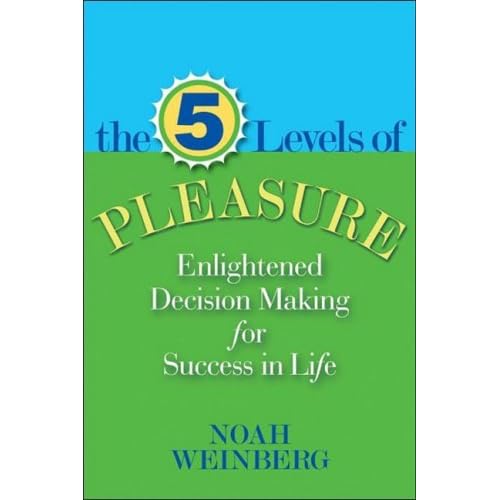
Following up on my previous message about the passing of Rabbi Noah Weinberg, anyone interested in reading some of Rabbi Weinberg's ideas can check out his book titled Five Levels of Pleasure: Enlightened Decision-Making for Success in Life:
http://www.amazon.com/gp/product/1590791231?ie=UTF8&tag=hpt-20&linkCode=as2&camp=1789&creative=9325&creativeASIN=1590791231
Harry's mission, Yitro's hearing, and the life of Rabbi Noah Weinberg OBM
For most of us nowadays it's hard to imagine changing around your life because of a mission that you feel, because of a drive to accomplish a specific job that you think is uniquely yours. We tend to go about our lives, doing what's right and doing what's right for us to do. But a life's mission? That's for more chivilrous times.
In Harry Potter and the Deathly Hallows a lot of people try to talk Harry out of fulfilling the mission that Dumbeldore left him. Aberforth says it most bluntly, but the questions are raised throughout the book. Is it a realistic mission? Can he trust that it's the right mission? Can he trust that he understood the mission correctly? As we know, Harry stuck with it, made the fateful decision after Dobby's death that he was going to persevere, and in the end he was successful.
Last Thursday Rabbi Noah Weinberg died in Jerusalem. I didn't know him, I never met him, I only heard him speak a few times and read very little of his teachings. But from what I've learned and heard from others, and from what I saw on a video that he released a few years ago for Tisha B'Av, I think there's an amazing lesson that we all can learn from him. He was truly a man with a mission. Raised in the religious Yeshiva communities of Baltimore and New York, descendent of a long line of scholars, he had an experience in his youth that shocked him: he talked with Jews who knew nothing of Judaism. He spent the rest of his life, to his last day, establishing schools and adult education centers worldwide to teach Judaism to those who knew nothing about it.
At the time this was radical. The Yeshiva world was fairly insular and most scholarship was very inner-directed. But he was on a mission. He was driven to do everything he could to eliminate Jewish ignorance, eliminate assimilation and inter-marriage, and teach the beauty of Torah to people who had never been exposed to it.
He said of himself that he felt that he had not accomplished enough. The thousands and thousands of Jews that had learned in his institutions, and the entire genre of institutions that he inspired, were not enough as long as assimilation and intermarriage were on the rise. He set the highest standard for himself.
Many people are writing about him and many people are continuing his work in Jewish education. I encourage anyone interested to read the articles about him at http://www.aish.com and other sites on-line. The articles and the web sites all reflect the thoughts and feelings of people that are trying to follow in his footsteps.
But the rest of us can learn a lesson from him that I think is just as important. When we see something that inspires us, that gets us thinking about a mission that needs to be done, we can decide to embark on it. Life missions are not just for Rabbi Weinberg, and (le'havdil) they're not just for Harry, Ron, and Hermione, they're for us as well. If the world needs to be changed, and if we feel the ability and the inspiration to do it, than we can try to make the inspiration a reality.
In this upcoming Shabbat's Torah portion, we read that Moses's father-in-law Yitro (Yisro) heard something that caused him to leave where he was and join the Jewish people. Our sages tell us that he heard of the events of the Exodus from Egypt, that these events inspired him to change around his life.
Interestingly, the same statement by our sages tells us that other great people of the time also heard of the events of the Exodus, but that they were not themselves inspired to join the Jewish people or in any way to react to the events. Yitro had the inspiration and the ability to make the mission a reality, even when other great people could not.
If we can all learn this lesson from Yitro, from Rabbi Weinberg, and from Harry, and can grab onto inspiration and make it a reality, taking on life missions that can change the world or at least our little portion of it, then (G-d willing) Rabbi Noah Weinberg's name will truly be of Blessed Memory.
In Harry Potter and the Deathly Hallows a lot of people try to talk Harry out of fulfilling the mission that Dumbeldore left him. Aberforth says it most bluntly, but the questions are raised throughout the book. Is it a realistic mission? Can he trust that it's the right mission? Can he trust that he understood the mission correctly? As we know, Harry stuck with it, made the fateful decision after Dobby's death that he was going to persevere, and in the end he was successful.
Last Thursday Rabbi Noah Weinberg died in Jerusalem. I didn't know him, I never met him, I only heard him speak a few times and read very little of his teachings. But from what I've learned and heard from others, and from what I saw on a video that he released a few years ago for Tisha B'Av, I think there's an amazing lesson that we all can learn from him. He was truly a man with a mission. Raised in the religious Yeshiva communities of Baltimore and New York, descendent of a long line of scholars, he had an experience in his youth that shocked him: he talked with Jews who knew nothing of Judaism. He spent the rest of his life, to his last day, establishing schools and adult education centers worldwide to teach Judaism to those who knew nothing about it.
At the time this was radical. The Yeshiva world was fairly insular and most scholarship was very inner-directed. But he was on a mission. He was driven to do everything he could to eliminate Jewish ignorance, eliminate assimilation and inter-marriage, and teach the beauty of Torah to people who had never been exposed to it.
He said of himself that he felt that he had not accomplished enough. The thousands and thousands of Jews that had learned in his institutions, and the entire genre of institutions that he inspired, were not enough as long as assimilation and intermarriage were on the rise. He set the highest standard for himself.
Many people are writing about him and many people are continuing his work in Jewish education. I encourage anyone interested to read the articles about him at http://www.aish.com and other sites on-line. The articles and the web sites all reflect the thoughts and feelings of people that are trying to follow in his footsteps.
But the rest of us can learn a lesson from him that I think is just as important. When we see something that inspires us, that gets us thinking about a mission that needs to be done, we can decide to embark on it. Life missions are not just for Rabbi Weinberg, and (le'havdil) they're not just for Harry, Ron, and Hermione, they're for us as well. If the world needs to be changed, and if we feel the ability and the inspiration to do it, than we can try to make the inspiration a reality.
In this upcoming Shabbat's Torah portion, we read that Moses's father-in-law Yitro (Yisro) heard something that caused him to leave where he was and join the Jewish people. Our sages tell us that he heard of the events of the Exodus from Egypt, that these events inspired him to change around his life.
Interestingly, the same statement by our sages tells us that other great people of the time also heard of the events of the Exodus, but that they were not themselves inspired to join the Jewish people or in any way to react to the events. Yitro had the inspiration and the ability to make the mission a reality, even when other great people could not.
If we can all learn this lesson from Yitro, from Rabbi Weinberg, and from Harry, and can grab onto inspiration and make it a reality, taking on life missions that can change the world or at least our little portion of it, then (G-d willing) Rabbi Noah Weinberg's name will truly be of Blessed Memory.
Wednesday, January 7, 2009
Facing the truth -- what would you do?
All through Order of the Phoenix, Harry and Dumbeldore and the others have a very hard time conveying to others the truth of Voldemort's return.
This is a situation that we all can understand - sometimes the truth is so scary that a lot of people would prefer to ignore it.
I believe that this is exactly what's going on right now in Israel. Even as most governments of the world, even some Arab governments, are supporting Israel's need to defend its citizens against years of terror, others (especially the media) are refusing to accept the reality of Palestinian terror.
The video clip below conveys the point very well. Hopefully, if the world can realize the truth, we can find a way forward from there that will succeed in bringing true peace, peace without terror.
This is a situation that we all can understand - sometimes the truth is so scary that a lot of people would prefer to ignore it.
I believe that this is exactly what's going on right now in Israel. Even as most governments of the world, even some Arab governments, are supporting Israel's need to defend its citizens against years of terror, others (especially the media) are refusing to accept the reality of Palestinian terror.
The video clip below conveys the point very well. Hopefully, if the world can realize the truth, we can find a way forward from there that will succeed in bringing true peace, peace without terror.
Harry Potter and Torah book on sale at Amazon
Amazon now has Harry Potter and Torah available at a sale price of $17.95, down from the usual price of $19.95. They also have it eligible for free shipping.
Click here to check it out!
http://www.amazon.com/gp/product/1847532373?tag=hpt-20&linkCode=as2&camp=1789&creative=390957&creativeASIN=1847532373
For a sample chapter that relates to this upcoming week's Torah portion, see a book chapter on Magical Protection.
Click here to check it out!
http://www.amazon.com/gp/product/1847532373?tag=hpt-20&linkCode=as2&camp=1789&creative=390957&creativeASIN=1847532373
For a sample chapter that relates to this upcoming week's Torah portion, see a book chapter on Magical Protection.
Monday, December 29, 2008
Good article in Wall St Journal
I recommend the following article to everyone interested in understanding the war underway in Gaza:
http://online.wsj.com/article/SB123051182944538487.html
http://online.wsj.com/article/SB123051182944538487.html
Saturday, December 27, 2008
Israel finally defends its citizens
Hi everyone. Here in Beit Shemesh we heard warplanes, and possibly missile explosions, today right before Shabbat lunch. As of now the news is good -- Israel appears to finally have done something right to defend its citizens against the thousands of rockets that have been fired from Gaza since Israel withdrew from Gaza.
We're all praying that the Israeli army finish its mission successfully, quickly, with as few casualties as possible.
We're all praying that the Israeli army finish its mission successfully, quickly, with as few casualties as possible.
Thursday, November 20, 2008
Shalshelet: Dealing with temptation and uncertainty
The Harry Potter books are filled with people who are having a hard time dealing with temptation, and are feeling a lot of uncertainty about what to do. In Deathly Hallows we see Xenophilius Lovegood trying to decide what to do when Harry visits:
Later, of course, we find out that he was torn over whether to help Harry or whether to turn Harry in to the death eaters in order to save Luna.
Many other times we see people in similar dillemas. The Malfoys are torn between their alliegence to Voldemort and their desire to save Draco. Harry is torn between searching for horcruxes and seeking hallows. Harry is also torn between believing in Dumbeldore and distrusting him.

The Torah identifies four people that epitomize dillemas. Each of them are marked with a special "trop" note, a special way of singing that word. This note is called a "shalshelet," and it appears only four times in the Torah. The note is shaped like a zig-zag line, signifying someone being torn between two sides, two possible decisions. The tune for the note is similar, a very long note sounding like someone going "back and forth" over a dillema.
The first shalshelet in the Torah was read in last week's Torah portion, VaYera. Angels go to the town of Sedom (Sodom) to destroy it, and save Abraham's nephew Lot and his family. As they lead them away, Lot is torn - does he stay in his town, his home, with his people, or does he leave with the angels? Gen 19:16 tells us "and he hesitated," and the Hebrew word, "va'yit'ma'ma," is marked with a shalshelet, telling us graphically and musically of Lot's dillema. Lot ends up saved from his indecision by the angels who "grabbed him by the hand" and led the family to safety.
The second shalshelet is in this Shabbat's Torah portion, Chayei Sarah. Abraham asks Eliezer his assistant to travel to Abraham's birthplace to find a wife for Abraham's son Issac. The Midrash tells us that Eliezer was conflicted about his task, because he truly wanted his own daughter to marry Issac. He knew that he could return to Abraham and say that he was unsuccessful, and Issac would likely marry Eliezer's daughter. Instead, as he arrived at his destination, overcome with indecision, the Torah tells us that he prayed to G-d for guidance and help in finding a suitable young lady. When the Torah tells us that Eliezer prayed, in Gen 24:12, the word is again marked with a shalshelet.
The third shalshelet is in the story of Joseph becoming a slave in Egypt, in the Torah portion of VaYeshev. After becoming a slave to Potifar, one of Pharoh's ministers, Potifar's wife attempts to seduce Joseph into immoral activities. Gen 39:12 tells us that "Joseph refused," again punctuated with a shalshelet. Joseph first tried to convince Potifar's wife that it would be wrong to do what she was suggesting, and then he simply ran out of the house.
The fourth shalshelet is found in an unlikely place, towards the end of the Torah when Moses is inaugurating Aaron's sons into their roles as priests (Lev 8:23). On the surface there's no dillema here, but the Midrash tells us that, similar to Eliezer, Moses wanted his sons to follow in his footsteps, but G-d decided that Aaron's sons would be priests but that Moses's own children would have no future role. In this case, the dillema didn't show itself in action, since Moses had the inner strength to simply perform the inauguration service. The shalshelet signifies how Moses felt, but he didn't let the feelings get in the way of what he had to do.
So we see in the Torah four different ways of dealing with dillemas:
1. Pray for Divine assistance (Eliezer)
2. Take active steps to reach the right decision (Yosef)
3. Just do the right thing, feel the dillema but don't act on it (Moses)
4. Fail the test (Lot)
Xenophilius Lovegood seems to have failed the test, and was saved from the consequences by Hermione. But Draco's parents passed, as much for self-interest as for doing the right thing. And of course Harry worked his way through his own dillemas, as victorious in his decisions as he is in his wandwork.
How are we at dealing with dillemas? If we can't just do the right thing, we can pray for clarity or we can take active steps to move away from temptation. Either way, if we want to succeed like Harry, one way is to learn the lesson of the shalshelet.
'Would it be OK if we came in?' asked Harry. 'There's something we'd
like to ask you.'
'I ... I"m not sure that's advisable,' wispered Xenophilius. He
swallowed and cast a quick look around the garden. 'Rather a shock ... my
word ... I ... I'm afraid I don't really think I ought to -'
...
His good eye moved again to Harry's scar. He seemed simultaneously
terrified and mesmerised... He kept swallowing, his eyes darting between
the three of them. Harry had the impression that he was undergoing some
painful internal struggle.
Later, of course, we find out that he was torn over whether to help Harry or whether to turn Harry in to the death eaters in order to save Luna.
Many other times we see people in similar dillemas. The Malfoys are torn between their alliegence to Voldemort and their desire to save Draco. Harry is torn between searching for horcruxes and seeking hallows. Harry is also torn between believing in Dumbeldore and distrusting him.

The Torah identifies four people that epitomize dillemas. Each of them are marked with a special "trop" note, a special way of singing that word. This note is called a "shalshelet," and it appears only four times in the Torah. The note is shaped like a zig-zag line, signifying someone being torn between two sides, two possible decisions. The tune for the note is similar, a very long note sounding like someone going "back and forth" over a dillema.
The first shalshelet in the Torah was read in last week's Torah portion, VaYera. Angels go to the town of Sedom (Sodom) to destroy it, and save Abraham's nephew Lot and his family. As they lead them away, Lot is torn - does he stay in his town, his home, with his people, or does he leave with the angels? Gen 19:16 tells us "and he hesitated," and the Hebrew word, "va'yit'ma'ma," is marked with a shalshelet, telling us graphically and musically of Lot's dillema. Lot ends up saved from his indecision by the angels who "grabbed him by the hand" and led the family to safety.
The second shalshelet is in this Shabbat's Torah portion, Chayei Sarah. Abraham asks Eliezer his assistant to travel to Abraham's birthplace to find a wife for Abraham's son Issac. The Midrash tells us that Eliezer was conflicted about his task, because he truly wanted his own daughter to marry Issac. He knew that he could return to Abraham and say that he was unsuccessful, and Issac would likely marry Eliezer's daughter. Instead, as he arrived at his destination, overcome with indecision, the Torah tells us that he prayed to G-d for guidance and help in finding a suitable young lady. When the Torah tells us that Eliezer prayed, in Gen 24:12, the word is again marked with a shalshelet.
The third shalshelet is in the story of Joseph becoming a slave in Egypt, in the Torah portion of VaYeshev. After becoming a slave to Potifar, one of Pharoh's ministers, Potifar's wife attempts to seduce Joseph into immoral activities. Gen 39:12 tells us that "Joseph refused," again punctuated with a shalshelet. Joseph first tried to convince Potifar's wife that it would be wrong to do what she was suggesting, and then he simply ran out of the house.
The fourth shalshelet is found in an unlikely place, towards the end of the Torah when Moses is inaugurating Aaron's sons into their roles as priests (Lev 8:23). On the surface there's no dillema here, but the Midrash tells us that, similar to Eliezer, Moses wanted his sons to follow in his footsteps, but G-d decided that Aaron's sons would be priests but that Moses's own children would have no future role. In this case, the dillema didn't show itself in action, since Moses had the inner strength to simply perform the inauguration service. The shalshelet signifies how Moses felt, but he didn't let the feelings get in the way of what he had to do.
So we see in the Torah four different ways of dealing with dillemas:
1. Pray for Divine assistance (Eliezer)
2. Take active steps to reach the right decision (Yosef)
3. Just do the right thing, feel the dillema but don't act on it (Moses)
4. Fail the test (Lot)
Xenophilius Lovegood seems to have failed the test, and was saved from the consequences by Hermione. But Draco's parents passed, as much for self-interest as for doing the right thing. And of course Harry worked his way through his own dillemas, as victorious in his decisions as he is in his wandwork.
How are we at dealing with dillemas? If we can't just do the right thing, we can pray for clarity or we can take active steps to move away from temptation. Either way, if we want to succeed like Harry, one way is to learn the lesson of the shalshelet.
Subscribe to:
Posts (Atom)